A Comparative Look at Organic Mattresses: Naturepedic vs. Savvy Rest
In an era where materials matter as much as design, the rise of organic mattresses asks us to consider not just the sleep we enjoy, but the ecosystems that cradle our nightly rest. This analysis surveys two leading voices in the space—Naturepedic and Savvy Rest—through the lens of materials, certifications, comfort philosophy, and lifecycle expectations. It is a non-commercial meditation designed to illuminate choices rather than to persuade toward a particular purchase.
A moment of context: what makes an organic mattress truly organic?
Organic mattresses carry more than a label: they embody a commitment to natural materials, transparent testing, and responsible sourcing. Certifications such as GOTS (Global Organic Textile Standard), GOLS (Global Organic Latex Standard), and OEKO-TEX Standard 100 provide a framework for credibility. Yet the landscape is nuanced. A mattress may boast organic cotton or natural latex but still rely on synthetic adhesives or flame-retardant formulations that complicate the purity narrative. The task, then, is to read the certification map with a critical eye and to understand how materials—cotton, wool, latex—behave in a real bedroom climate.
Naturepedic: a synthesis of organic cotton, wool, and thoughtful architecture
Naturepedic has long positioned itself at the intersection of organic farming ethics and patient engineering. Their mattresses frequently showcase layers of organic cotton fabric, outer wool flame barriers, and inners crafted from certified organic latex or coils. The result is a system—layered yet collaborative—where temperature regulation and edge support are deliberate design choices rather than afterthoughts.
From a materials standpoint, Naturepedic emphasizes clean ingredients and straightforward construction. Organic cotton keeps the surface soft and breathable, while wool—besides its natural flame-retardant properties—acts as a temperature moderator. This combination can yield a mattress that feels neither too warm in summer nor too cool in winter, a balance many sleepers crave as they navigate modern climate variability.
Certifications and testing underpin the credibility narrative. The GOTS framework assures organic fiber content and responsible processing of textiles, whereas GOLS ensures the latex layer meets organic standards at scale. For readers, the practical implication is a reduction in chemical load and a greater emphasis on recyclability at the end of the product’s life.
Savvy Rest: modularism, latex, and a philosophy of customization
Savvy Rest embraces modularity, offering natural latex cores paired with organic cotton covers and wool blends that can be adjusted over time. Their approach foregrounds long-term durability and personalized comfort, inviting sleepers to refine firmness, contour, and zoning after initial setup. The result is a bed that can evolve with a sleeper’s changing needs—whether due to aging, shifting sleep positions, or climate-driven preferences.
In practice, Savvy Rest’s architecture often centers on Dunlop or Talalay latex with organic or certified components. The modular philosophy translates into a lifecycle narrative: replace or upgrade individual components rather than discarding an entire mattress. This speaks to a broader sustainability conversation—one that values reparability and the potential for an extended product life.
Certifications and independent testing remain essential here as well. The presence of GOTS or GOLS certifications, coupled with OEKO-TEX or similar third-party attestations, helps to corroborate the claim of organic composition and safe chemical exposure. For conscientious buyers, this frame offers a transparent map of how materials interact with sleep quality, humidity, and body heat.
Three key voices across eras: a historical, a mid-century, and a contemporary observer
In a world where knowledge was tethered to the parchments of power, Hypatia represents an enduring archetype: the disciplined seeker who questions received wisdom. Though far removed from the modern factory floor, her spirit underpins a critical approach to materials and claims. In the context of organic mattresses, Hypatia would demand rigorous demonstrations: what are the exact chemical pathways involved in flame retardants, if any? How do agricultural practices transform the life cycle of cotton and wool? The moral compass she embodies—clarity, evidence, and integrity—remains our north star when evaluating brands and certifications.
Addams reframed comfort as a social project: how the spaces we inhabit—homes, bedrooms, schools—shape dignity, health, and community life. Transposed to the realm of organic mattresses, her point might be this: a bed is not simply a private retreat but a site of everyday equality—accessible sleep for all. The materials we select, the transparency of certifications, and the longevity of a mattress combine to reduce environmental and health disparities, offering a quiet form of social stewardship.
In the modern discourse, sleep is deemed essential for performance and decision-making. An organic mattress, when chosen with attention to materials and certifications, becomes part of a larger ecosystem of well-being. The Savvy Rest ethos of modularity aligns with a mindfulness about consumption: investing in components that can be upgraded rather than replaced signals a shift toward sustainable luxury. Huffington’s frame reminds us that the best mattress is not merely a product but a habit: a steady ritual of rest that underwrites clarity, creativity, and humanity.
Practical considerations for readers: how to compare Naturepedic and Savvy Rest in real terms
- Material composition: Naturepedic leans on organic cotton and wool with a transparent approach to layering; Savvy Rest emphasizes natural latex cores and modularity. Consider your climate, sensitivity to heat, and allergy profile when weighing these foundations.
- Certifications: Look beyond the brand name to the certificates. A mattress may carry GOTS, GOLS, or OEKO-TEX labels on specific layers. Read the scope of each certification: is it for the entire mattress, or only for select components?
- Temperature regulation: Wool layers, latex cores, and cotton covers each interact differently with humidity and heat. If you sleep hot, prioritize breathable surfaces and avoid dense memory-foam analogs unless explicitly balanced with airflow.
- Durability and lifecycle: Modular systems like Savvy Rest enable component replacement, while Naturepedic’s architecture emphasizes a cohesive, purpose-built design. Consider whether you prefer a single replacement or a system that evolves with you.
- End-of-life considerations: What happens when the mattress reaches the end of its life? Are components recyclable, or can they be repurposed? A future-facing choice may weigh heavily in favor of brands with robust disassembly and recycling programs.
A curated product highlight: Essex Low Footboard Bed
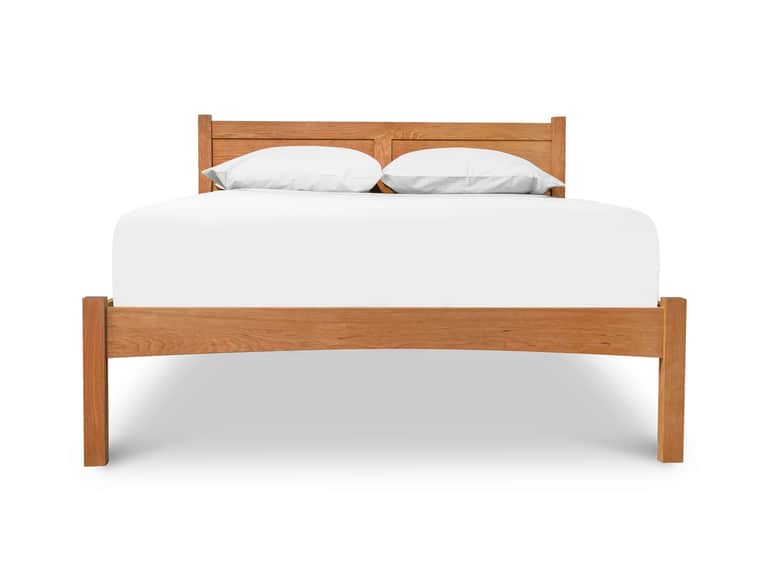
The Essex Low Footboard Bed is a statement of solidity and craft—a panel bed built from solid hardwoods and finished with eco-friendly linseed oil and wax. It stands as a grounding frame for the sleeping universe above, its minimalist lines a counterpoint to the complexity of a layered mattress. The bed’s design invites a quiet night’s energy into the room, one where materials age with grace and form a lifework of everyday use.
Brand: Vermont Furniture Designs
Finish: Linseed oil and wax
Price: $1,999.00
- Product: Essex Low Footboard Bed (4338)
- Key feature: Customizable with wood options and two-tone design
- Material: Solid hardwood
Note: The Essex bed exemplifies a complementary element in a sleep sanctuary focused on longevity and tasteful restraint. Its presence grounds the more ethereal concerns about mattress materials in a tangible sense of room-scale design.
Conclusion: a thoughtful path through the organic mattress landscape
Natural materials deserve more than a casual glance. They invite us to consider the entire life of the sleep ecosystem—from fiber farms to factory processes, from on-top comfort to the furniture that surrounds the bed. Naturepedic and Savvy Rest each offer a different voice in this chorus: one that foregrounds a solemn embrace of traditional organic textiles, and another that champions modular adaptability, longevity, and customization. The best choice, as so often in this domain, is not simply a verdict on a product but a posture toward sleep itself: a commitment to transparency, a curiosity about certification, and a respect for the ecosystems—human, botanical, and industrial—that sustain our nightly rest.
As the conversation evolves, readers are encouraged to view certifications not as bureaucratic hurdles but as shared promises: a language that helps us understand what we are sleeping on and why it matters. Whether you gravitate toward Naturepedic’s organic cotton-wool architecture or Savvy Rest’s modular latex core, the overarching aim remains the same: a bed that honors the climate of our era, supports restful nights, and endures with grace through the decades ahead.
Images of selected products are displayed below for reference. The Essex Low Footboard Bed is featured as a representative bed frame; Naturepedic and Savvy Rest materials and certifications are discussed in principle, not as endorsements.
Essex Low Footboard Bed — Vermont Furniture Designs
Further reading and references
For readers seeking a deeper dive into organic certifications, the following themes are recommended: the nuances of GOTS and GOLS, the role of OEKO-TEX in textile safety, and real-world lifecycle assessments of organic mattresses. Engage with independent laboratory reports, brand sustainability statements, and third-party certification documents to build a robust, context-rich understanding of how these products perform in everyday life.